Female Owned Businesses in Los Angeles to Support

This article was originally published on March 14, 2021, in 60 Seconds Magazine. As of June 3, 2023, 60 Seconds Magazine‘s website is no longer active.

It’s March, and that means it’s Women’s History Month! While we should celebrate the women in our lives everyday, I also wanted to take this opportunity to give a shoutout to some of my favorite local female-owned businesses in Los Angeles!

Republique

I’ve been a big fan of Republique for many years now! It’s the perfect spot for brunch, and the decor makes the experience of dining at Republique seem like a little getaway from the hustle and bustle of Los Angeles. Walter and Margarita Manzke own Republique and also serve as the chefs for the renowned restaurant, which is currently open for takeout and patio dining!

Nong La

Nong La’s take on traditional Vietnamese cuisine always makes me miss my grandma’s cooking! Siblings Elain and Victor Phuong opened the restaurant to honor their mother’s recipes, and all of the delicious dishes served at Nong La are reminiscent of the food found on the streets of Ho Chi Minh City!

Salt & Straw

If you’re in the mood for dessert, don’t forget to check out Salt & Straw, which is owned by Kim Malek. Salt & Straw has a very large presence in Los Angeles, since they have very unique flavors like Lemon Cheesecake Crumble and Cinnatopia Cinnamon Bun. The best part–the ice cream is sourced from family-owned Scott Brothers Dairy where cows are grass-fed and never given hormones or antibiotics.

Lavender & Honey

I love coffee, and one of my favorite female owned coffee shops is Lavender & Honey in Pasadena. Charlie and Melanie Porter started Lavender & Honey due to their love for cafe culture, and they have used their coffee shop as a way to make a difference in the community by sourcing their ingredients from local vendors.

What are some of your favorite female-owned businesses?

How Diversity Leads to Greater Awareness, Understanding, and Acceptance

This article was originally published on October 31, 2020, in 60 Seconds Magazine. As of June 3, 2023, 60 Seconds Magazine‘s website is no longer active.

While diversity may not necessarily be an unfamiliar concept, especially for those of us who live in more liberal states or come from more openminded cultural backgrounds, it is still important to recognize the positive impact that it has on us in our day-to-day lives.

If I can only choose one take-away from the conversations surrounding diversity, it will definitely be the way diversity improves our ability to think outside of the box and communicate effectively.

Let’s take a look at schools, for instance.

Historically, culturally diverse academic campuses offer a more robust educational experience, since students have the opportunity to interact with peers and mentors that come from different backgrounds and upbringings. This is especially true for students who may have previously been raised amongst people of similar racial, cultural, or socioeconomic backgrounds.

A diverse academic environment allows these students to come into contact with peers that they haven’t interacted with before, which in turn can challenge and dispel predisposed stereotypes about certain races, ethnicities, cultures, or economic upbringing. These interactions will also allow them to be more collaborative and will also present students with the opportunity to view things from a different perspective, skills that are very crucial to future success, especially in the workforce.

Most notably, diversity helps us understand and accept differing beliefs and perspectives, which thereby encourages us to become more aware and empathetic.

How Diversity in Literature Leads to Greater Awareness

This article was originally published on January 17, 2021, in 60 Seconds Magazine. As of June 3, 2023, 60 Seconds Magazine‘s website is no longer active.

When we’re younger, we form predisposed perceptions of what the “norm” is based on our own families and culture, and we often use these notions to judge those that have different upbringings and points of view.

As I was growing up, I read voraciously, and through literature, I was able to learn more about many different cultures and places. Reading has allowed me to explore the concept of diversity in a greater context, and as a result, I am much more aware of the differences that exist in our world. Through literature, I have become more openminded and empathetic, and rather than being skeptical of differences, I appreciate diversity and how it makes our world extraordinary.

Books such as Harper Lee’s To Kill a Mockingbird, Margaret Atwood’s The Handmaid’s Tale, George Orwell’s 1984, and Jhumpa Lahiri’s The Namesake have helped me understand and acknowledge the differences that exist in our world, especially the issues concerning race, culture, religion, abilities, gender, and socioeconomic status. These books have encouraged me to view our society in a completely new perspective, and in doing so, I have also started to change my attitude towards differences by celebrating the things that distinguish us.

I highly encourage reading the books mentioned earlier to expand your own perceptions about diversity. Knowledge helps us become more objective about the differences that exist in our communities, and it will also help us appreciate how these differences can bring us together.

Conscious Black-Owned Businesses to Support

This article was originally published on February 14, 2021, in 60 Seconds Magazine. As of June 3, 2023, 60 Seconds Magazine‘s website is no longer active.

February is Black History Month, and I wanted to use this time to learn more about African American heritage and traditions! In my research, I saw a lack of Black representation in a majority of companies in the United States and around the world. This is why I want to dedicate this article to all of the amazing ethical and sustainable businesses that are Black-owned. Let’s use this month to celebrate all of their achievements and highlight the very important roles that these businesses play in the lifestyle, home, fashion, and beauty industries!

1. A.Au

    One of the companies that I was so excited to learn about was A.Au. The brand offers thoughtfully handcrafted pieces that are made by skilled ateliers in Nigeria. The best part – A.Au aims to empower women to embrace their history, culture, and identity by allocating 10% of sales towards education for Abua youths.

    2. msichana

    Another black-owned company that I admired was msichana. The brand focuses on beautifully bold clothing made by women artisans earning fair wages. I love how msichana combines their efforts to create connections and cultural experiences, empower women through fair wages and education, and reduce their carbon footprint by ethically making their clothing.

    3. Bolé Road Textiles –

    I’m also a big fan of the vibrant home goods produced by Bolé Road Textiles. Their selection of products which include pillows, towels, rugs, curtains, wall hangings, and table linens. All of Bolé Road textiles are handwoven in Ethiopia, and I love how their owner, Hana Getachew, is using her brand to support other small woman-owned businesses in Ethiopia.

    There are so many more amazing Black-owned businesses that offer a wide array of sustainable and ethical products, while making a difference in the community! Check out this list here!

    Interview with Jennet Chow: A Look into Entrepreneurship as a First-Generation Asian American Businesswoman

    This article was originally published on November 15, 2020, in 60 Seconds Magazine. As of June 3, 2023, 60 Seconds Magazine‘s website is no longer active.

    I recently had the pleasure to speak with Ms. Jennet Chow, the founder, co-CEO, and head of design at Evolution Design Lab. Jennet is a first-generation Asian American business owner, and she has successfully launched multiple private labels, as well as her own brand, Jellypop Shoes, which specializes in designing and creating women and girls’ shoes for customers in the United States and Canada.

    Aside from her successful business ventures, Jennet is also an active member of the community, lending her support to local food banks, small business owners, and homeless shelters. With the help of her team, Evolution Design Labs. has been able to make a significant difference during this global pandemic by donating sneakers, essential items, and masks to those in need.

    As a first-generation Asian American with a background in business, fashion, and the creative industry, Jennet’s accomplishments are truly inspirational, and I was able to speak to her about the various experiences that have shaped her as a businesswoman and philanthropist.

    (Elizabeth will be shortened to “E”, and Jennet will be shortened to “J” from this point forward.)

    E: How did you start your business?

    J: I started my business while transitioning from working at my parents’ company, Prima Royale Enterprises. I worked at their shoe company Prima Royale Enterprises for about 10 years, building up their team in the Design Department and working in many roles: in Production, Design and Marketing. My parents established their company when I was around 5 years old, so I grew up in their world of footwear. Throughout their career, my parents had a lot of rough days. However, it wasn’t until their partner passed away due to cancer that they seriously thought about retiring due to their own health. It was a difficult time for all of us. However, there were many employees and people involved and it would have been too devastating to close the company completely.

    I wanted to help continue the business with my husband, who also had experience helping with my parents’ operations. Therefore, I named the company Evolution Design Lab (EDL), to place emphasis on how a company can evolve to adapt to the times. Our time working at Prima Royale helped us maintain a lot of the same customers and buyers in the US, and we continued the relationships with manufacturers in China. I couldn’t have started without my family’s support, experience working, and the relationships developed at Prima Royale Enterprises. Today we are just what the name of our company states. Within the 11 years at EDL, we have evolved so much as a company, and we have adapted faster than any other footwear company in technology, operations, and 3D design.

    E: What does a typical day look like for you? 

    J: I start off checking emails and messages in the early morning before the kids wake up. Then, I spend time with our dog and feed him. I have 3 kids, so I make sure they have food ready to eat between their breaks for online school in the morning. Once that’s done, I read what’s happening on the news, check out social media – Instagram / Facebook – for what the trends are in everything, not just clothes, but also what people are thinking, what foods people are loving, what’s bothering people, what’s exciting others, what’s making people tick, etc. I am always curious what people are thinking. Then I continue checking emails / projects that have to be done in design. I go on Discord, WeChat, and Stylemanager, which is a system Mike, my husband, built for the company. I communicate with China, throughout the US, and work with the designers on an hourly basis. If I don’t check communication regularly, I can fall far behind, so I am always reading updates.

    On a usual workday, I do have meetings on Zoom, Discord, or over the phone. I have 2-6 meetings throughout the day about various topics – website development, new programs, prototype corrections, ecommerce status, selling, trend boards, etc. This job is perfect for those who love multiple projects all at once. I would be very bored doing the same thing every day!  When I’m done with all my work I go back to “mommy mode.” I cook a lot. After Dinner I either help my youngest do his homework or I’m cleaning. We don’t have any help now due to COVID-19 precautions, and I like to be clean, so I am constantly cleaning or doing the laundry on my free time.  An exciting day for me these days is going to the grocery store!

    During the summer I took some executive online classes at Yale’s School of Management, so my evenings consisted of reading case studies and learning about business and leadership. I love to constantly learn about what I find useful, so I’m always learning and reading. I just received my certificate for the Yale program on Women Leadership and plan on continuing my education in the future. You can never be too old. I also love listening to podcasts in between, in particular “How I Built This” by Guy Raz. I can relate to a lot of the founders and business owners – it’s very therapeutic, enlightening, and encouraging to listen to.

    E: What is the most challenging and most rewarding thing about having your own business? 

    J: One of the most challenging things about having my own business is the fact that not everyone understands what I am going through, nor do I expect them to. People think it is very glamorous to own a business, but it is very stressful, and there are a lot of things employees do not see, a lot of hardships. While at a workplace people have co-workers to talk to, but being a leader can sometimes be quite lonely. There are also rarely any breaks, and the business is always on my husband’s and my mind. I have learned to stay calm about most situations and maintain optimism. I have also improved a lot with my delegation and hiring the right people. That has really helped me with my work-life balance, which had been a struggle the last 10 years. I used to miss some of my kids’ birthdays and important events, and I also didn’t sleep enough at one point due to traveling too much.

    Today, I feel like working from home has helped me maintain a work-life balance more than ever before.  When I had to travel all the time, it was definitely so terribly difficult. In contrast, I am now able to spend more time with my kids, feed them, have meals with them – this has been a dream come true. I am not wasting my time driving and flying from place to place. I am present.

    My kids are quite independent, so it helps that when I’m working, they are working too. When they need me, everything else can wait. I do put family first, especially in the evenings. This is the rewarding part. Being able to go through my struggles and learning to adapt to them and make it work positively. 

    I am also most proud of the fact that I was able to start Evolution Design Lab (EDL) when I was 29 years old. This is the 11th year running. I am also proud that we have become more of a tech company and have pivoted quickly because we have Stylemanager and Segovia, a customized online supply-chain platform no one was really open-minded to 15 years ago. I am also proud that we were able to prove our success to people who were skeptics. When we first started, we had a lot of naysayers in my parents’ generation. They said that we would probably fail and discouraged us. But I realized that today, they accomplished nothing by saying those hurtful words while we kept working hard. Today, I thank them because they became a chip on my shoulder and motivated me to prove them wrong.

    E: To conclude the interview, do you have any advice for students who are hoping to start their own creative ventures / businesses in the future? 

    J: Yes, my advice is to always be prepared and be kind, but tough when needed. It is always important to know what is happening in the world. It is also important to be ready to work extremely hard for a long period of time. It is like running a marathon, and you need a lot of endurance and support to run your own company. I would also say it is so important to evolve and stay calm every step of the way.

    We have a WYDcommunity, where we give advice to Gen Z. Here is my advice from one of my posts there:

    My advice to Gen Z females is to work hard, be ambitious, and you must have a positive attitude. Also, it’s so important to work extremely hard, especially in the beginning. Nothing comes easily, so don’t expect anything to be easy! Grow a tough skin and keep a positive mindset.  Don’t compare yourself or your timeline with others, especially on social media. That is all a facade!  If you are not working hard and are unreliable, people will notice right away. Be mindful of your reputation as you grow your career.

    Sources:

    Interview conducted through email with Jennet Chow

    Images courtesy of Jennet Chow and Evolution Design Lab

    Additional information for the introduction from http://voyagela.com/interview/meet-jennet-chow-evolution-design-lab-pasadena/

    Book Review: In Cold Blood by Truman Capote

    In Cold Blood by Truman Capote

    A Look at Capital Punishment in Truman Capote’s In Cold Blood

    “In school we only learn to recognize the words and to spell,” Truman Capote writes in his nonfiction novel, In Cold Blood, “But the application of these words to real life is another thing that only life and living can give us.” Capote’s book explores the events leading up to and following the savage murders of four members of the Clutter family by ex-convicts Dick Hickock and Perry Smith. As we learn more about the murderers and the lives they led prior to committing this heinous crime, Capote presses some of the most profound questions about empathy and moral judgment. Specifically, he examines Smith and his tragic upbringing, finding it “possible to look at the man… without anger—with, rather, a measure of sympathy—for Perry Smith’s life had been no bed of roses but pitiful, an ugly and lonely progress toward one mirage or another.”

    Capote offers no easy answers to the difficult questions In Cold Blood raises. Rather, he lets his layers of exploration speak for itself, allowing readers to come to their own conclusions about the Clutter family, the town of Holcomb, and ultimately, Hickock and Smith. At the time of its publication fifty-five years ago, In Cold Blood was an instant success, mainly because nonfiction had previously never been presented in the form of a novel before, but Capote’s in-depth storytelling helped to pioneer the true crime genre of creative nonfiction. Through extensive research boasting 8,000 pages of notes, a series of personal interviews, and a cleverly interwoven story that includes three distinct narratives, Capote manages to fully present all sides in an eloquent, prose-like manner.

    In Cold Blood presents a moving portrayal of the Clutter family and how there has never been “a word against them,” how they were the “least likely to be murdered.” This makes the violence of their death all the more disheartening. In Cold Blood is also a desolate depiction of Holcomb specifically after the murder of the Clutters. At the story’s start, the town was “like the yellow trains streaking down the Santa Fe tracks,” and “drama, in the shape of exceptional happenings, had never stopped there.” Following the Clutters’ deaths, though, the “congregation of neighbors and old friends had suddenly to endure the unique experience of distrusting each other.” In Cold Blood also exposes Hickock and Smith as not merely villains but also as people with pitiful lives, which eventually led them to make all of the wrong choices. But most importantly, In Cold Blood catapulted the debate of capital punishment to a national level due to Hickock and Smith’s convictions, which carried mandatory death sentences.

    Though Capote was widely praised by most of the literary community at the time of the book’s publication, In Cold Blood received its fair share of criticism, with some questioning the narrative’s truthfulness. In particular, it was later revealed, through interviews with certain citizens of Holcomb, that some facts were changed to suit the story, certain scenes were added to embellish the narrative, and a few conversations were made-up for effect. For instance, lead investigator Alvin Dewey mentioned, after In Cold Blood’s publication, that he never went to visit the Clutters’ graves, which is a key scene towards the end of the book. Likewise, Josephine Meier, the undersheriff’s wife, also noted that she never became close to Smith, but Capote highlights their friendship, noting that Meier even held Smith’s hand on occasions when he cried in his cell.

    At the time of its publication, the commercial success of the book pushed the public to not want to “discuss anything wrong with a moneymaker like that,” as noted by true crime writer Jack Olsen. As a result, while these discrepancies were noted at the time, no action was taken. In today’s creative nonfiction landscape, a book like In Cold Blood would have been fact-checked more thoroughly in order to preserve the integrity of the nonfiction genre, and it would have been done with greater ease as well, since we are living in a digital age.

    Despite these drawbacks, Capote effectively reconstructs the murders through an objective portrayal of the characters. In particular, Capote portrays Hickock and Smith as merely human, and even the townspeople of Holcomb, who harbored feelings of contempt for the murderers, were “amazed to find them humanly shaped.” While a measure of sympathy is felt for Hickock and Smith due to their troubled childhood, it does not, in any way, change the fact that four innocent people were killed. Smith did not feel any remorse, stating that he didn’t “feel anything about it” despite knowing that the Clutters “had experienced prolonged terror,” that “they had suffered”. In fact, he felt “sorry for [himself]… but that’s all.”

    This leaves readers with the burning question of whether empathy is “deep enough to accommodate either forgiveness or mercy” in the face of such violence. In Cold Blood left me pondering over this for weeks, and rather than arriving at a conclusion of any sort, I am only left with even more questions.

    What are the right consequences for those who kill without an ounce of remorse? Will taking the lives of Hickock and Smith remedy the loss of the Clutters’ lives? If not capital punishment, then what is considered “justice” for the Clutter family?

    I still do not have any concrete answers, and I do not think I ever will.

    Capote uses In Cold Blood to thoroughly examine the death penalty, and though he never outwardly states it in the book, he is against it. However, the debate of capital punishment remains multifaceted because we will never be able to truly understand empathy and forgiveness, or the “application of these words to real life” without knowing how it feels to have our family cruelly ripped apart for no reason, by people who do not regret their actions. Capital punishment can be discussed indefinitely, but there are no right or wrong answers. “Only life and living can give us” the answer we are looking for.

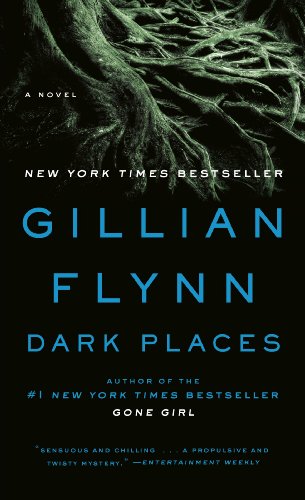
    Book Review: Dark Places by Gillian Flynn

               In her second novel, Gillian Flynn explores 1980s rural America in the midst of the Satanic cult hysteria. In particular, Dark Places portrays the haunting yet unintended ramifications of immense poverty with a suspenseful and captivating narrative that highlights the class issues, marital abuse, and abandonment that ultimately destroyed one family.

                As the sole survivor of her family’s murder at the hands of her older brother, Libby Day is now a struggling adult who is unable to move on with her life due to the emotional trauma she suffered because of her mother, Patty Day, and sisters’ deaths. As a result of her tragic circumstances, Libby describes herself as unlovable, with a “grudging curve of the lips where a smile” should be:

               I have a meanness inside me, real as an organ. Slit me at my belly and it might slide out, meaty and dark, drop on the floor so you could stomp on it. It’s the Day blood. Something’s wrong with it.

               At first glance, she is characterized as an untrustworthy and selfish young woman who turns to exploiting her family’s death for money by attending a meeting at the “Kill Club,” which consists of a group of overly enthusiastic individuals obsessed with notorious crimes. More specifically, there is a group that believes Libby’s older brother, Ben Day, who was accused of murdering her mother and sisters, is innocent. Though she initially refuses to recall the horrific events of January 3, 1985, Libby is soon driven into revisiting the case in a desperate attempt to earn some more money in order to survive.

                One of the things that stands out the most in Dark Places is the different points of view and flashbacks that Flynn uses to lead the reader through the narrative. Typically, in fiction, authors tend to stick to just one point of view – whether that’s first-person point of view or third person limited point of view – but Dark Places is told through interchanging perspectives. The novel opens with Libby’s first-person account of her life in the present, but as the story progresses, the reader is also introduced to Patty and Ben’s perspectives through third person limited flashbacks, which detail crucial events that eventually lead to the haunting murders of the Day family.

                Through these flashbacks, the reader meets a string of other possible suspects, such as Runner Day – Libby’s deadbeat father, Krissi Cates – the girl who accused Ben of molesting her when she was ten, Diondra Wertzner – Ben’s high school girlfriend, and Trey Tampano – Diondra’s cousin. At the same time, Libby learns of the additional suspects and the events of the past, albeit a little later than the reader. Though the author risks giving the reader more knowledge than the narrator, Flynn maintained a skillful balance, and as such, she effectively amplified the suspense that drove the mystery forward, urging readers to continue turning the pages in a race to see who will uncover the true murderer first – the reader or Libby? 

                The abruptness of these shifting perspectives, as well as the time jumps from past to present should have been jarring, but Flynn makes it work for this particular novel, since she breaks these accounts up into very easy-to-follow chapters. Most importantly, these shifts in perspective and time contribute to the overall haunting portrayal of the Day family’s desperate circumstances. While Libby’s point of view adds to the overall suspense of the story by pushing readers to want to find out the true murderer, both Patty and Ben’s sides of the story portray the desolation and hopelessness that plagued their family as a result of their immense poverty.

                 Aside from its less-traditional structure, another storytelling aspect that Flynn executes impressively in Dark Places is characterization, but most specifically, the juxtaposition of Libby and Krissi’s characters. Despite having only heard his voice on the night of the murders, Libby is inevitably steered by law enforcement officials to implicate and testify that she had seen her brother at the scene of the murders, since Ben was the easiest and most obvious suspect, fitting into the community’s preconceived Satanic cult hysteria narrative:

    “I know this is hard for you, Libby, but if you say it, say it aloud, you will help your mom and sisters, and you will help yourself start to heal. Don’t bottle it up, Libby, don’t bottle up the truth. You can help us make sure Ben is punished for what he did to your family.”

               On that same note, Krissi was steered by psychologists to accuse Ben of sexual abuse, despite that not being the whole truth:

                  “You seem like a smart, brave girl. I’m relying on you to tell me what happened. Oh, nothing happened? Gosh, I thought you were braver than that. I was really hoping you’d be brave enough to help me out on this.”

               The authorities’ preconceived notions about Ben’s character played a huge role into his wrongful accusation on both accounts, and Flynn uses both Libby and Krissi’s similarities and differences to highlight a haunting phenomenon that brings to light the shortcomings of the justice system, particularly in cases in which biases have already been formed prior to any evidence or testimonies.

               One of the drawbacks in Dark Places comes from Flynn’s excess details of carnage, or more specifically, animal sacrifice. These events add to the Satanic cult hysteria culture that surrounded rural American in the 1980s and highlighted its significance in the town’s and Ben’s backstory. However, rather than focusing too much on the “devil worship,” the story could have benefited from more internalization from Libby’s perspective, so that the readers can witness her growth throughout the events of the narrative. Flynn’s structure allowed for detailed flashbacks that painted a very vivid image of the murders, but at the same time, Libby’s arc, including the moment in which her character grows or changes, is severely undermined because the readers are distracted by the gruesome details of Ben’s past.

                Despite these slight shortcomings, Flynn still does a marvelous job in creating a believable world that is driven by suspense. Although all of the characters have many faults, Flynn’s storytelling makes the reader care about the fates of everyone, which helped to drive the story forward. In addition, through Dark Places, Flynn explores the many flaws of the justice system, particularly in an impoverished community driven by moral panic surrounding Satan worship. The culmination of all of these factors resulted in a chilling yet enjoyable story.

    4 Ways to Save for Graduate School (Without Financial Aid or Loans)

    It’s no secret that graduate school is very expensive, but at the same time, it’s one of the most valuable investments you will ever make.

    To make this post completely transparent, I am actually going to share the exact cost of how much I’m paying for my Masters of Fine Arts in Creative Writing at Chapman University, a university made up of an extraordinary blend of liberal arts, science, and professional programs in Orange, California. To give some context, Chapman University is a private school and is ranked in the top 15% of American colleges and universities. As such, the cost of attending a school like Chapman University is actually pretty high, especially when compared to public schools.

    Here is a breakdown of the cost of attendance for the Creative Writing program at Chapman:

    • $1035 per unit of class
    • Each class is typically 3 units
    • To be a full-time student, you have to enroll in at least 3 classes (or 9 units)
    • To complete the program, you must complete 12 classes (or 36 units)

    So the cost = $1035 x 36 = $37,260 for classes only.

    The above does not include room and board, books, cost of living, transportation, medical insurance, etc., so I’ve budgeted around $45,000 for two years of graduate school. That’s almost $50,000, which is half of $100,000. If you’re like me, just hearing these numbers can make your eyes want to pop out of your head.

    Although the cost of a graduate program can definitely play a factor in your decision to attend, don’t let it deter you! Aside from government granted aid options and loans, there are a lot of different ways to save and budget, so that the cost of attending school isn’t so daunting. Read on to see how I managed to pay for school without any financial aid or loans!

    Start a Savings Account

    Even prior to applying for graduate school or being accepted into a program, one of the first things I ever did after I finished my undergraduate studies was start a savings account. One of the benefits of having a savings is that it forces you to put a set amount of money into an untouchable account every month, so you regularly (and unconsciously) save for a rainy day. Another perk is the interest that you earn; remember – checking accounts don’t offer any interest!

    I started my savings account in 2014, and I’ve been working full-time ever since then, until I eventually started my graduate studies in 2020. This means I had a full 6 years to actually save on a monthly basis, so by the time I actually decided to pursue my Masters of Fine Arts, I had a considerable amount of money saved up.

    The amount of money that you want to put into your savings on a monthly basis is entirely up to you, but my suggestion is this – if you’re still relatively young without a lot of financial burdens, then I’d definitely recommend putting more money into your savings. You’ll only thank yourself in the long run!

    Budget

    The next topic I want to cover is budgeting! Whether you’re working, getting ready to attend school, or are already a graduate student, budgeting is actually a very important skill to have as an adult.

    One of the easiest ways to control your monthly spending is to ask yourself the question of want versus need. It may be tempting to buy things that are on sale, especially if there’s a huge discount, but at the same time, if you don’t actually need this item, then it’s not a useful purchase.

    For instance, while last season’s sneakers may be selling for a discounted price, you don’t necessarily need another pair, especially if you already have two other pairs of perfectly wearable sneakers at home. In the long run, this method will help you save a lot of money!

    Another effective way to budget is to use the “cost per wear” or “cost per use” method. I use a very simple formula to assess whether a purchase is actually worth the price.

    For example, there is a winter coat that is on sale for $150. While at a glance, this article of clothing may seem pricey, I like to evaluate the item’s worth based on how many times I’ll actually wear it, which in this case, is at least 10 times during the winter season. This means that I’m technically only paying $15 every time I wear it! That’s definitely a good purchase.

    Limit Eating Out / Ordering In

    Another easy way to save money is to limit eating out or ordering from delivery services such as Postmates, Uber Eats, DoorDash, etc.

    When I was working, I occasionally went out for lunch or happy hour with my coworkers, but I tried to limit these outings to only once a week. Although a meal may only be $15, if I ate out every day, that would be $75 per week, $300 per month, and $3600 per year! If you looked at my previous calculation of my school costs, then that’s the cost of about 3.5 units of class! Although saving a little everyday may not seem like much, it’ll make such a huge difference in the long run.

    The same thing can be said about ordering from Postmates or Uber Eats. While these services make ordering in so convenient, just be careful of doing it too often, since the costs can easily rack up. Even if there is free delivery, these delivery apps charge a service fee, and don’t forget that you also have to tip your driver. A meal that costs $10 can easily be rounded up to almost $20!

    A helpful tip – one of the easiest ways to curb the urge to eat out is to bring your own lunch to work! It’s also a lot healthier too, since you have more control over what you eat!

    Take Advantage of Discounts / Sales / Coupons

    Another easy way to save money is to take advantage of discounts, sales, and coupons! If I don’t need something right away, I typically wait until there’s a sale, so I can get a better deal. Signing up for retailers’ email newsletters is a great way to stay in the loop and have first access to discounts or coupons!

    Live at Home

    And one of my last tips – live at home, if you’re still able to. I know that a lot of us dream of moving out right after college, but in actuality, it’s really hard to be able to live on your own as a twenty-one- or twenty-two-year-old, especially in cities like Los Angeles or New York City, where the cost of living is super high.

    In LA, the cost of a studio in a safer neighborhood can range anywhere from $1800 – $2500 per month (depending on how close you are to the heart of the city), and this doesn’t even include utilities, such as gas, water, electricity, phone, internet, etc.

    An average starting salary for a college graduate is around $15 per hour, so in one day you’ll earn $120, in one week you’ll earn $600, and in one month you’ll earn $2400. That’s barely enough to cover just rent, and you didn’t even factor in all of the utilities, and we haven’t even gotten around to the topic of groceries.

    I know not everyone is fortunate enough to be able to move back in with their parents, but if the opportunity arises, don’t hesitate to take your parents up on their offer! Although it may suck to move back into your childhood bedroom and back to your hometown, there’s nothing wrong with having a little bit of support before your career takes off. Paying your parents for groceries or for household items cost significantly less than living on your own, and I’m so thankful to my parents for their generosity.

    And that wraps up the methods that have helped me save money for graduate school. I understand that not all of these methods may be accessible to you, but I do hope that they have given you some insight into how to budget and save, especially if you’re looking into pursuing graduate school.

    3 Reasons Why You Should Pursue a Masters of Fine Arts (MFA) in Creative Writing

    When I first started applying for a Masters of Fine Arts (MFA) program for Creative Writing, I looked at a lot of different blogs and websites for more information, but unfortunately, what I was able to find was a bit dated, and therefore, wasn’t too helpful.

    Nevertheless, I was still able to apply to four of my dream schools and was accepted to two prestigious programs. It’s been a year since I’ve submitted my applications, and now that I’ve been in an MFA program for one semester, I wanted to provide some guidance for those of you who are wondering if you should pursue a Masters of Fine Arts in Creative Writing.

    1. Opportunities for a Multitude of Career Paths

    Contrary to popular belief, majoring in Creative Writing and English opens up doors to a wide variety of different career paths. No matter what profession you’re in, being a good communicator is always an asset, and this is especially apparent in industries such as marketing, advertising, sales, copywriting, social media, etc., where being an effective writer is a highly sought-after skill. The biggest plus – these skills are easily transferrable, so you can definitely apply your expertise in a variety of different industries!

    2. It Gives You the Chance to Work with and Meet Other Great Writers

    One of the main reasons why I wanted to pursue a Masters of Fine Arts was so I would have the chance to meet other great writers. Growing up as a first generation Asian American, I didn’t have a lot of opportunities to meet other writers or even likeminded individuals with similar interests in reading or writing. Being a part of an MFA program has allowed me to not only meet other great writers, it has also given me the chance to work them, so that I could further improve my craft.

    As I continue pursing my degree, I want to take advantage of the positive environment that I’m in, in order to connect and bond with the members of my cohort, as well as my professors. Their support and encouragement are some of the most valuable takeaways from the program, and it’s a great reason to pursue an MFA, especially if you’re looking to build lasting connections in the writing industry.

    3. Because You Want To!

    And most importantly, the best reason to get an MFA is because you want to!

    I first graduated with a Bachelors of Arts in Business and a minor in English in 2014. While I loved creative writing, it was a field I was too afraid to pursue at first, due to all of the negativity surrounding a life as a “starving artist.” As a result, I started a career in corporate marketing, and while I exceled in it, I could never help thinking about the “what-ifs,” if I had indeed pursued a writing career instead.

    In 2020, my mindset really changed though. If this past year has taught me anything, it’s that life is unpredictable. I used to live for the future, but I’ve realized that there is no time like the present, especially when it comes to pursuing things that we are passionate about because there is nothing more fulfilling.

    Introduction: Elizabeth N. Tran

    Elizabeth N. Tran is a writer and content creator. She is pursuing her Masters of Fine Arts in Creative Writing and Masters of Arts in English at Chapman University. She previously earned her Bachelor of Arts in Business from UC Irvine.

    She is currently working on a collection of short stories and poetry, developing a young adult novel, and writing a creative nonfiction story exploring the Asian American identity. Her poems, “Cooking Dinner” and “New Year’s Eve” have been published in Calliope Art & Literary Magazine, and her short story “The Red Thread” has been published in Ouroboros Magazine. She also has a poem titled “Existing in the In-Between” that is forthcoming in the Spring 2022 issue of Calliope Art & Literary Magazine.

    Elizabeth was also an Editor and Staff Writer at 60 Seconds Magazine, an online publication that shares digital content and blog posts with a young adult audience across the United States. She develops weekly blog posts for the online publication, where her articles have been published in the Fashion/Beauty and Lifestyle tabs of the magazine.

    On top of writing for 60 Seconds Magazine, Elizabeth is also a freelance writer and photographer, offering blogging, social media writing, copywriting, proofreading, and photography services, most notably in the lifestyle, fashion, and beauty sectors.